
Dual Degrees in Faith and Public Life
Wesley Theological Seminary (Wesley DC) Dual Degree Programs
Seeking more than one Master’s level degree from Wesley DC? Explore your multidisciplinary academic journey with these available dual degree pathways:
- MDiv/MA (Master of Divinity + Master of Arts)
- MDiv/MTS (Master of Divinity + Master of Theological Studies)
- MA/MTS (Master of Arts + Master of Theological Studies)
Wesley DC + American University’s School of Public Affairs (SPA) Dual Degree Programs
Prepare to lead at the intersection of theology, public service, and social impact. Wesley Theological Seminary and American University offer several dual degree options combining deep theological education with training in public administration or policy:
- MDiv/MPA (Master of Divinity + Master of Public Administration)
- MDiv/MPP (Master of Divinity + Master of Public Policy)
- MTS/MPA (Master of Theological Studies + Master of Public Administration)
- MTS/MPP (Master of Theological Studies + Master of Public Policy)
- MTS/MA (Master of Theological Studies + Master of Arts) in International Development
- MTS/MA (Master of Theological Studies + Master of Arts) in Peace and Conflict Resolution
- MA/MPA (Master of Arts + Master of Public Administration)
- MA/MPP (Master of Arts + Master of Public Policy)
Dual Degree Program Overview
Students are admitted separately to each institution and may begin the dual degree in either program. Once enrolled in both, students benefit from integrated advising and coordinated curricula. Time to completion varies:
- MDiv Dual Degrees: ~4 years
- MA Dual Degrees: ~2–2.5 years
- MTS Dual Degrees: ~3 years
Wesley DC students may apply to American University during their first year and vice versa.
Why Pursue a Dual Degree?
Dual degrees are ideal for students called to:
- Lead in faith-based nonprofits or advocacy organizations
- Integrate public policy with pastoral or theological practice
- Serve in government, NGOs, or churches with a public witness
- Engage in public theology, community organizing, or justice work
You’ll graduate fluent in both the language of public systems and the depth of theological ethics—uniquely equipped for ministries in the public square.
Format & Flexibility
Students work closely with advisors from both institutions to:
- Customize course schedules across both campuses
- Maximize credit sharing (up to 12 hours)
- Coordinate capstone projects with a shared theological/public lens
- Ensure eligibility for financial aid and full-/part-time status
Admission & Tuition
- Apply separately to each institution
- Pay tuition by credit hour to each school individually
- Internship required for students without prior professional experience
MTS/MA Dual Degree in International Development
Theology meets global transformation.
Wesley Theological Seminary and American University’s School of International Service offer a powerful dual-degree program for those called to integrate faith-based insight with international development and justice work.
Earn both a Master of Theological Studies (MTS) from Wesley DC and a Master of Arts (MA) in International Development from American University, right in the heart of Washington, DC.
Why This Dual Degree?
- Combine theological depth with practical global expertise
- Prepare for leadership in NGOs, global nonprofits, advocacy, or policy
- Study with top scholars in religion, economics, politics, and development
- Complete two degrees with fewer credits and less time than earning them separately
Program Features
- Shared credit hours reduce total coursework
- Take classes at both Wesley DC and American University
- Located in a city where global change happens
Who It’s For
- Faith-driven change-makers
- Global development professionals
- Students preparing for doctoral work in theology or international affairs
- Leaders ready to make an impact at the intersection of faith and global justice
Length of Program
6 to 8 semesters, on average
Full-time: 2 ½ -3 years, including summer semester
Part-time: up to 5-6 years
Credit Hours
33 credits for the MA degree at the School of International Service at American
42 credits, minimum, for the MTS degree at Wesley DC (including 19 elective credits)
75 total credits for the dual-degree
Ready to Serve Globally with Theological Vision?
Learn more about the MTS/MA Dual Degree in International Development and begin your journey toward meaningful, world-changing work.
MTS in Theological Studies Requirements (Wesley DC, 45 credits)
Required Courses:
- Introduction to Hebrew Bible (4 credits) BI-101 and -102 or BI-175
- Introduction to the New Testament (4 credits) BI-171 and -172 or BI-175
- The Church in History (6 credits) CH-101 and -102
- Systematic Theology (6 credits) ST-305 and -306
- Religion and Society (6 credits) Religion and Society courses must include at least two of the following areas: Ethics, Sociology of Religion, Pastoral Care and Counseling, Anthropology of Religion, World Religions. Only three credits in any one of these areas will count toward the degree requirement.
Elective Credits (Wesley DC, 19 credits)
You may use these to:
- Sample a range of curricular offerings
- Concentrate your electives within a certain specialization
Before you choose electives, we suggest you:
- Peruse our elective options in the catalog
- Request a faculty member in a chosen discipline to help guide your selection, especially if you are considering further graduate study
MA in International Development Requirements (American University, 30 credits)
- Introduction to Economic Theory (3 credits); may be waived
- Micropolitics of Development (3 credits)
- International Development (3 credits)
- Survey of Economic Development (3 credits)
- One MAID core course (3 credits)
- Quantitative Analysis (3 credits)
- One approved methods course (3 credits)
- Concentration courses (6 credits)
- Internship (3 credits)
- Substantial Research Paper in conjunction with MTS Paper (3 credits)
Admission Requirements
You must apply and be admitted separately to each program.
For the Master of Theological Studies at Wesley DC, submit the following online:
- Application
- Statement of purpose
- Academic transcripts
- References
- Application fee
For the Master of Arts at American University, submit the following online:
- Application
- Academic transcripts
- Letters of recommendation
- Graduate Record Examination (GRE) scores
- Application fee
Or mail all materials to:
Office of Admissions
American University
4000 Massachusetts Avenue, N.W.
Washington, DC 20016
Phone: (202) 885-6000
Fax: (202) 885-1025
MTS/MA Dual Degree in Peace and Conflict Resolution
Description and General Requirements
Masters of Theological Studies in conjunction with Masters of Arts in Peace and Conflict Resolution at American University.
Credit Hours
39 credits for the MA degree at the School of International Service at American
42 credits, minimum, for the MTS degree at Wesley (including 14 elective hours)
81 total hours for the dual-degree
Length of Program
6 to 8 semesters average, on average
Full-time: 2 ½ -3 years, including summer
Part-time: up to 5-6 years
MTS in Theological Studies Requirements (Wesley DC, 42 credits)
Required Courses (28 credits)
- BI 101-102 Introduction to the Hebrew Bible (6)
- BI 171-172 Introduction to the New Testament (6)
- CH 101-102 The Church in History (6)
- ST 305-306 Systematic Theology (6)
- Religion & Society (4 credits) Religion and Society courses must include at least two of the following areas: Ethics, Sociology of Religion, Pastoral Care and Counseling, Anthropology of Religion, World Religions.
Elective Credits (14 credits)
You may use these to:
- Sample a range of curricular offerings
- Concentrate your electives within a certain specialization
Before you choose electives, we suggest you:
- Peruse our elective options in the catalog
- Request a faculty member in a chosen discipline to help guide your selection, especially if you are considering further graduate study
MA in Peace and Conflict Resolution Requirements (American University, 39 credits)
Successful students will have:
- 39 credits of approved graduate coursework with a cumulative grade point average of 3.00
- a minimum of 12 credits in the major field including one theory course and one 3 credit graduate-level economics or international economic policy course appropriate to the field
- 12 credits in a concentration selected from offerings in SIS or other teaching units of the university
- 6 credit hours in research methods
- 3 elective credits and
- A 3 credit hour capstone experience
- Capstone experience: demonstration of critical thinking, research and writing skills through completion of a master’s thesis, substantial research paper requirement, or practicum. All courses taken to fulfill this requirement must be passed with a grade of B or better.
- Thesis: 6 credit hours of thesis credit and submission of the thesis.
- Substantial research paper requirement: 3 credit.
- Practicum: 3 credits.
- Evidence of professional experience in the field: Relevant internship or work experience must be certified.
- Proficiency in a modern foreign language: Research competence in English and another language relevant to the student’s career objectives must be certified.
Course Requirements
Core (6 credits)
- 3 credit hours of IPCR Seminar I
- 3 credit hours of IPCR Seminar II
Economics (3 credits)
Complete one of the following:
- ECON-603 Introduction to Economic Theory (3 credits)
- SIS-673 Politics of Development (3 credits)
- Approved course in economics (3 credits)
Social Science Research Methodology (6 credits)
- SIS-600 Statistics, Research Design, and Research Methods for International Affairs (3 credits)
or - SIS-619 Special Studies in International Politics (3 credits)
- SIS-612 Qualitative Research Methods in Peace and Conflict Resolution (3 credits)
or - SIS-639 Selected Topics in International Conflict Resolution Skills (total of 3 credits)
or - Other approved methodology course appropriate to the student’s research interests
International Pecae & Conflict Resolution Concentration (12 credits)
Gateways
Complete 6 credits from the following:
- SIS-606 Culture and Peace and Conflict Resolution: Alternatives to Violence (3 credits)
- SIS-611 International Negotiation (3 credits)
- SIS-613 Reconciliation and Justice (3 credits)
- SIS-735 Peacebuilding Theory and Organization (3 credits)
Additional Coursework
Complete 6 credits in one of the following International Peace & Conflict Resolution concentrations:
- Culture, Identity, and Peace
- International Negotiation
- Peacebuilding
- Reconciliation and Justice
Supplemental Concentration (6 credits)
- 6 credits approved by the student’s advisor making up an academically-sound concentration defined by a central concept and focused on a student’s particular area of interest
Capstone Experience (3 credits)
- SIS-797 Master’s Thesis Supervision (1-6); may include 3 elective credit hours
or - Substantial research paper or practicum requirement
Electives (3 credits)
- Selected from skills workshops, internship for credit, master’s thesis requirement, or other elective courses
Admission Requirements
You must apply and be admitted separately to each program.
For the Master of Theological Studies at Wesley DC, submit the following online:
- Application
- Statement of purpose
- Academic transcripts
- References
- Application fee
For the Master of Arts at American University, submit the following online:
- Application
- Academic transcripts
- Letters of recommendation
- Graduate Record Examination (GRE) scores
- Application fee
Or mail all materials to:
Office of Admissions
American University
4000 Massachusetts Avenue, N.W.
Washington, DC 20016
Phone: (202) 885-6000
Fax: (202) 885-1025
Hear from Our Students and Graduates
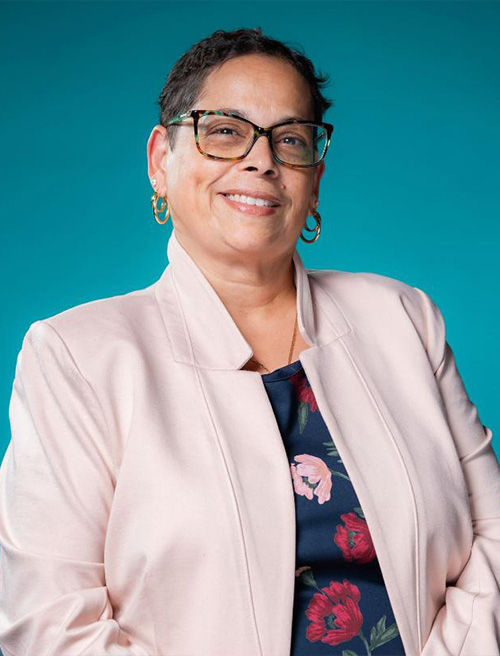
Kimberly Mitchell
- Master of Arts, expected graduation date May 2026
Kimberly Mitchell
- Master of Arts, expected graduation date May 2026
“Being at Wesley DC during this time has been a blessing from the support from classmates and professors to the staff.”
Publications
Education
Research Interests
Course of Study
Masters
Classes Taught
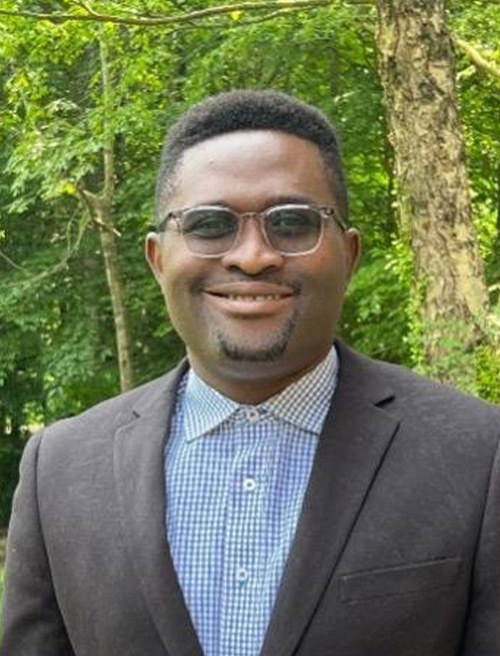
Akwasi Sarpong
- Master of Divinity, expected graduation date May 2027
Akwasi Sarpong
- Master of Divinity, expected graduation date May 2027
“At Wesley DC, I learned that my career path wasn’t different from my spiritual journey but an integral part of it.”
Publications
Education
Research Interests
Course of Study
Masters
Classes Taught
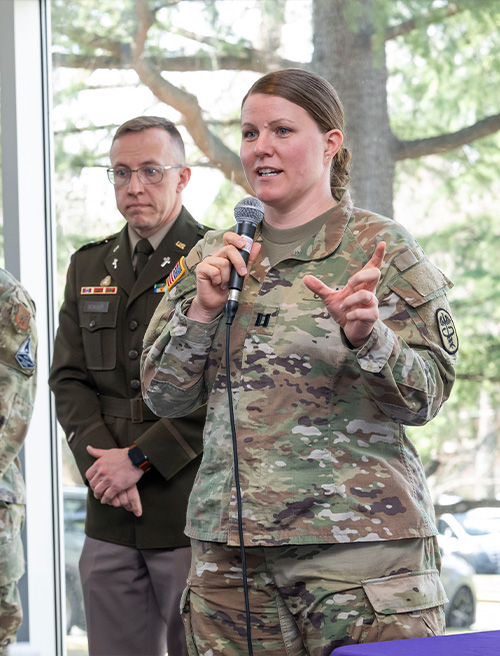
Army Chaplain Brittany Wooten
- Army Chaplain, DMin '25
Army Chaplain Brittany Wooten
- Army Chaplain, DMin '25
U.S. Army Chaplain Corps. Former Pastor at Derby Global Methodist Church. Former Pastor at Grace Church.
“At Wesley DC, I got to be part of a once in a lifetime collaboration that changed everyone for the better!”
Publications
Education
Research Interests
Course of Study
Masters
Classes Taught
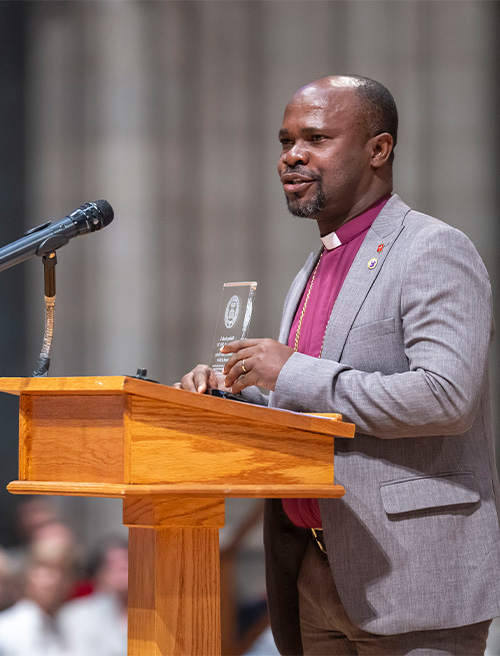
Ande Emmanuel
- Lifelong Learning Participant
Ande Emmanuel
- Lifelong Learning Participant
Rev. Ande I. Emmanuel is the Senior Pastor of the United Methodist Church Antakiya Mayodassa Jalingo. He currently serves as the Conference Secretary of the Southern Nigeria Annual Conference. He served four years as the Administrative Assistant to the Nigerian Bishop and the Communications Director for the Nigeria UMC Episcopal Area.
He completed his Master of Divinity at Reform Theological Seminary in Mkar, Nigeria. He completed his Master of Theological Studies at Wesley Theological Seminary in Washington DC. While at Wesley, Rev. Ande Emmanuel was an intern with the General Board of Church and Society working with the “Imagine No Malaria” program and following legislative advocacy on Peace Building on Capitol Hill. He was ordained Elder by Bishop Julius C. Trimble at the Iowa UMC Annual Conference. Upon his return to his home country Nigeria, he has worked with the General Board of Church and Society as Minister for Congregational and Community Engagement focusing on peace building and conflict transformation.
He has attended General Conference since 2012 and served as a delegate 2016, 2019, and 2020. He is the founder of Africa Voice of Unity, a caucus that is working for the unity of the United Methodist Church across Africa irrespective of the outcome of the next General Conference.
Rev. Emmanuel is happily married to his wife, Lami Ande Emmanuel and their union is blessed with three children.
Publications
Education
Research Interests
Course of Study
Masters
Classes Taught
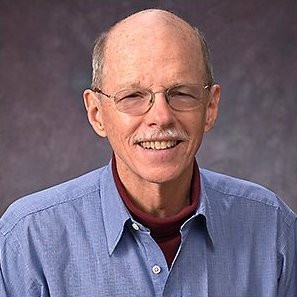
DANE F. SMITH, JR.
- Lifelong Learning Participant
DANE F. SMITH, JR.
- Lifelong Learning Participant
I entered the Foreign Service (U.S. Department of State) in 1966 after one year at Union Theological Seminary and two years in the Peace Corps in Ethiopia. My assignments were mainly in Africa, including Senegal, Liberia, Botswana, and Sudan. I served as U.S. Ambassador in Guinea (1990–1993) and Senegal (1996–1999). Between stints, I was Special Presidential Envoy for Liberia (1995–1996), working with African leaders to craft an agreement to end the civil war in Liberia. I retired from the State Department in 1999.
During this period, I was an active layman, involved in various overseas churches—Baptist, Mennonite, Episcopalian—and then at a United Methodist Church in Montgomery County, Maryland. Beginning about 1997, I began occasional preaching. For more than 20 years, I have preached several times annually at Chevy Chase United Methodist Church. In that context, I decided to renew my high school acquaintance with Greek through two semesters at Wesley
Seminary, under the inspired teaching of Dr. Carla Works. A subsequent effort to learn Hebrew was cut short after one semester when I was recalled to duty at the State Department as Senior Advisor to the U.S. Government on Darfur during 2011–2012. My study of Greek has aided my
understanding of the New Testament and has informed the lay preaching, which gives me enormous satisfaction.
Publications
Education
Research Interests
Course of Study
Masters
Classes Taught
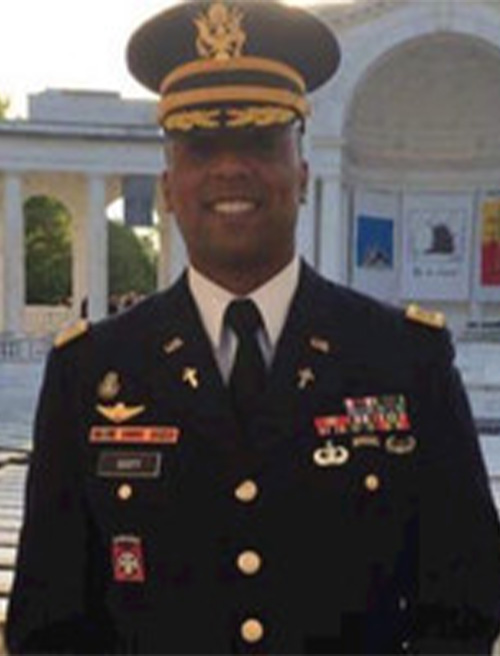
CHAPLAIN (LTC) JOHN SCOTT
- DMIN ’20
CHAPLAIN (LTC) JOHN SCOTT
- DMIN ’20
When he began his military career, Army Chaplain (LTC) John Scott (DMin ’20) didn’t intend to become a chaplain. He was initially commissioned as an armor officer in 1997 and served as a combat arms officer for 10 years. But at almost every turn, it was chaplains who helped him navigate life.
Scott first found Christ thanks to the chaplain at an ROTC summer training camp in 1996. A couple of years later, he was struggling to finish ranger school, a very intense two-month leadership development program. The regular weekly worship services and the chaplain who led them helped Scott persist and complete the program. In 2003, another chaplain baptized Scott, his wife, and their oldest daughter. It would take a while for his vocational path to shift, but
Scott knew he wanted to do what these chaplains had done for him: to help, support, and counsel service members and their families.
Eventually, Scott found his way to seminary and was recommissioned as an Army Chaplain. He has always pursued education and, after several years working as a chaplain, came to Wesley as part of the Military Chaplaincy Doctor of Ministry program. The robust scholarships for that program played a part in his choice, but Scott says that Wesley’s culture was equally attractive.
The program requires students to take 2 of the 10 required courses on campus, but Scott enjoyed the Wesley community so much that he chose to take 4 classes on-site. “The experience was just really genuine,” he says, citing Dr. Sathi Clarke’s course on interfaith relations and Dr. Douglas Powe’s work on community engagement as two specific Wesley encounters that have shaped his ministry.
These days, Chaplain Scott puts his Wesley degree to work as a chaplain in the National Capitol Region. He has become a regular supporter of the Military Chaplaincy DMin program,
hoping to help others have the same kind of genuine experience that he did.
Publications
Education
Research Interests
Course of Study
Masters
Classes Taught
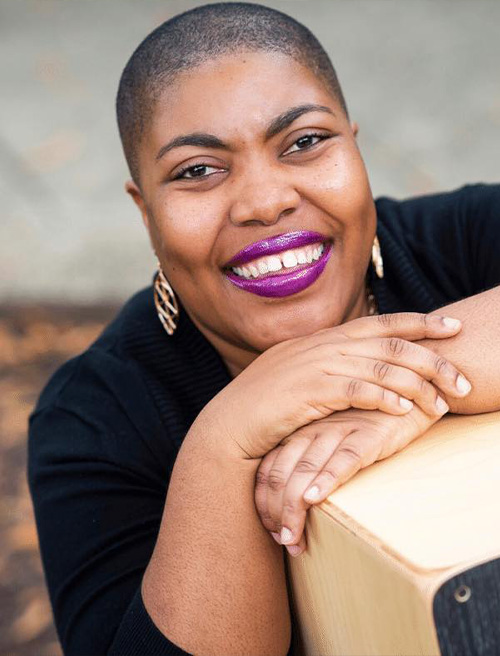
DR. TECHIKA C. RHODES
- MDIV ’21
DR. TECHIKA C. RHODES
- MDIV ’21
“I didn’t choose education; education chose me.” That’s how Dr. Techika C. Rhodes (MDIV ’21) explains her calling toward public service as a higher-education administrator. Rhodes has always had a desire to help people. Even as an elementary school student, she was serving on
the safety patrol and volunteering her time to tutor younger children. Her first job as a teenager was as an aide to children and adults with disabilities at the Brownwood Life Care Center in her hometown of Ft. Smith, Arkansas; this entry-level position led to her becoming an instructor and
therapy aide in the program.
At Wesley, Rhodes was able to channel her desire to help into formal ministry roles. She found herself drawn to helping her fellow students navigate the educational system, and she had the opportunity to intern with Wisconsin Avenue Baptist Church, where she worked at the pastor’s Citygate nonprofit, tutoring neighborhood 5th graders. After serving at Wisconsin Avenue Baptist, she interned at the faith- based nonprofit Women’s Alliance for Theology, Ethics, and Ritual. The year after she graduated with her MDiv, Rhodes was invited to serve as a teaching assistant for several courses. She loved it.
Rhodes completed her Doctor of Ministry degree from Howard University’s Divinity School in
2024, where her thesis focused on helping people, of course, specifically evangelists struggling with burnout. She has been invited to share and present that research far and wide, including at the Church of God in Christ’s 116th Holy Convocation Academic Forum.
These days, Dr. Rhodes is working on her second doctoral degree, a Doctor of Education degree in Higher Education Administration and Leadership from Regent University. She plans to
continue doing what she’s always done: following that innate desire to help people.
Publications
Education
Research Interests
Course of Study
Masters
Classes Taught
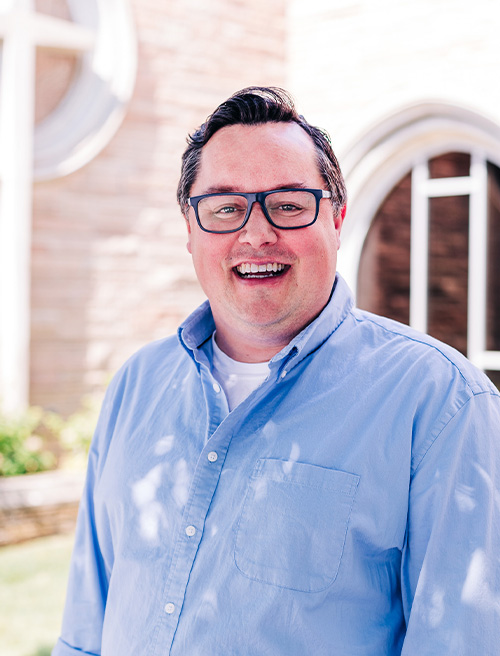
REV. ADAM BRIDDELL
- Graduate: MDIV ’12
REV. ADAM BRIDDELL
- Graduate: MDIV ’12
As an undergraduate, I studied political science at the University of Northern Iowa and worshipped at the First United Methodist Church of Cedar Falls. My time there nurtured in me a love for community service and making a difference for the good in the lives of our neighbors.
When I completed my undergraduate studies, I moved to Washington, DC, and worked for the U.S. Senate’s Health, Education, Labor, and Pensions (HELP) Committee. I served Senator Mike Enzi of Wyoming as one of his higher education policy advisors. I married Raymie, who was (and still is) working for the U.S. Army Corps of Engineers. When I experienced a “Holy Nudging” to be more involved in the life of my community, Wesley Seminary was there to come alongside our family on that journey. I am now an elder in the Oregon-Idaho Annual Conference of the United Methodist Church.
These past few months, it has been heartbreaking to see the good work of so many faithful civil servants be demolished so recklessly. My wife’s vocation is among thousands of others now in jeopardy. I believe that all Christians are called to study and practice the way of Jesus. There is
no evidence of Christian faith being demonstrated in the behavior of our president and his advisors.
But our family’s faith has been a sustaining force through this season of uncertainty.
I experienced Wesley Seminary as a place of formation, preparing leaders to serve in churches where people are NOT asked to “check their brains at the entrance to the sanctuary.” Wesley’s faculty consistently challenged us to be mindful of the church’s responsibility to care for the poor, look after people on the margins, and be faithful to a God who expects us to do justice, love kindness, and walk humbly with God. Perhaps Wesley has been preparing faithful leaders for a time such as this, and for that, I am grateful.
Rev. Adam Briddell leads the Amity Campus of the Cathedral of the Rockies, Boise First United Methodist Church, in Idaho.